My Cat Kicks Litter Everywhere. What Can I Do?
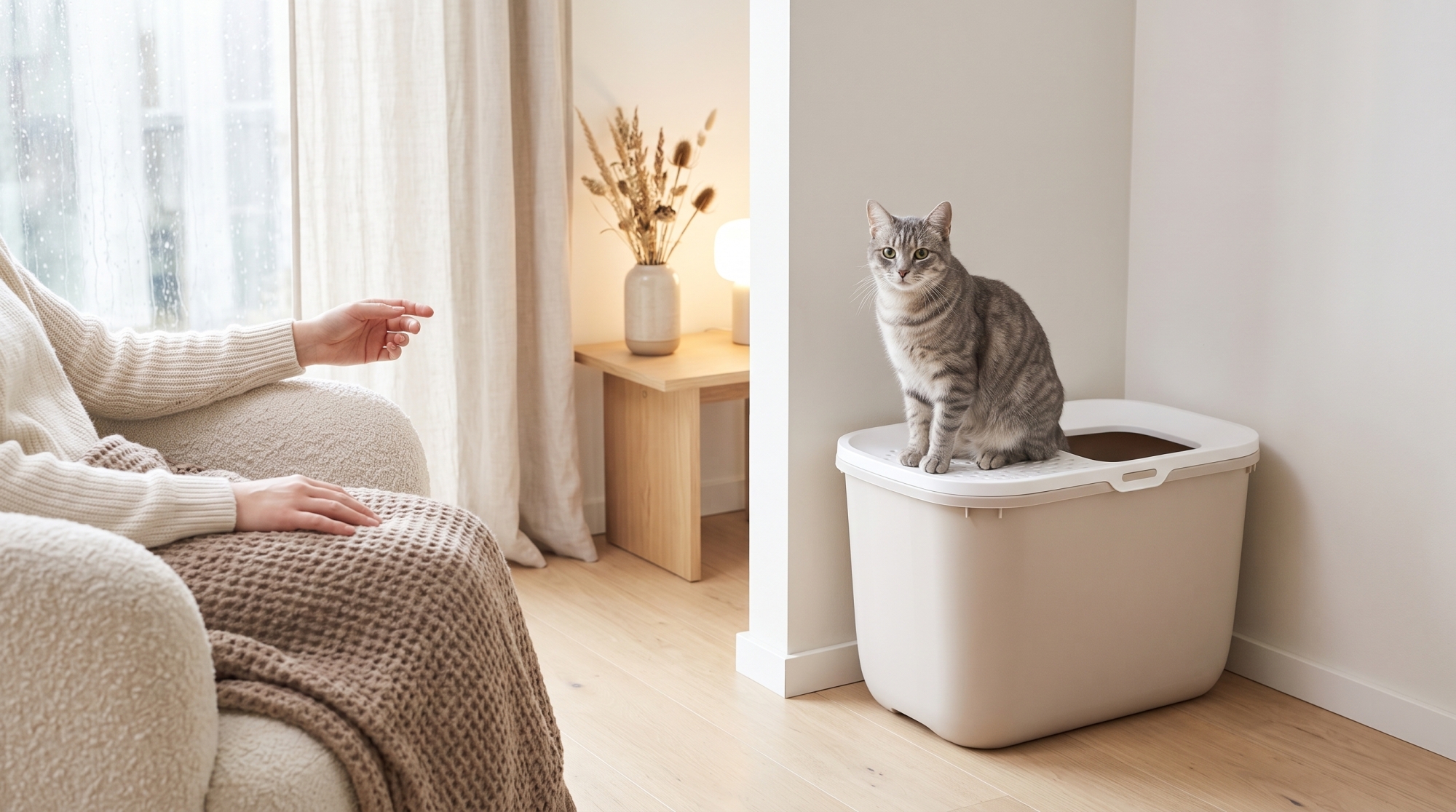
You sweep in the morning. By the evening, there's cat litter on the floor again. Next to the litter box. In the hallway. Sometimes even in your slippers.
Sound familiar?
Your cat isn't doing anything wrong. Digging and covering are natural cat behaviours. But that doesn't mean you have to live with litter all over your home.
The trick is to understand how the litter escapes before deciding how to stop it.
Why does my cat kick litter everywhere?
Some cats dig gently. Others seem determined to reach the bottom of the earth.
Either way, digging is normal. The mess happens when litter leaves the box.
And it usually happens in two different ways.
1. Your cat kicks litter out while digging.
When your cat digs or covers her waste, litter flies over the sides. Higher walls or a covered design can help keep more of it inside.
2. Your cat carries litter out on her paws.
Small granules stick to your cat's paws and travel across the floor when she steps out. A perforated exit grid or a litter mat can help catch them.
Some cats manage both.
The good news? Once you know where the litter is coming from, finding a solution gets much easier.
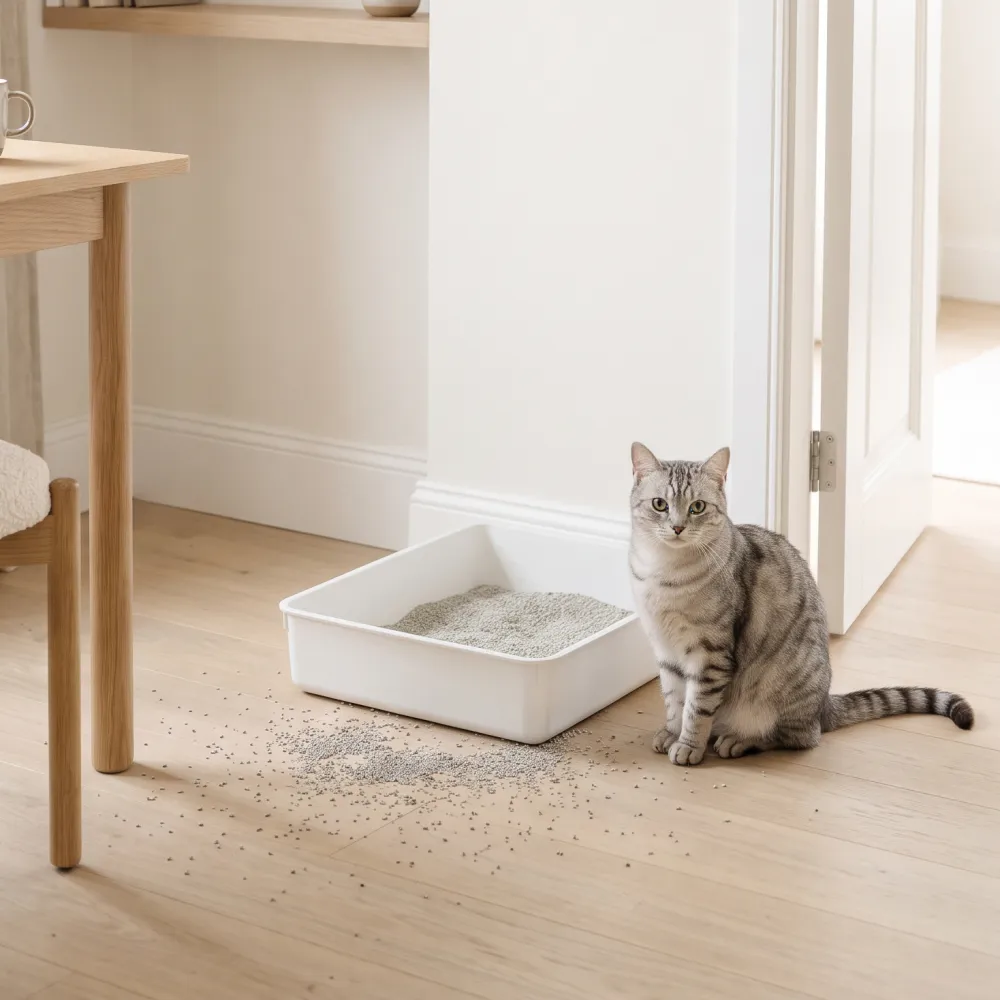
Four things to check before changing your litter box
Before buying a new litter box, take a closer look at the one your cat already uses.
1. Is the litter box big enough?
Your cat needs enough room to turn around, dig and find a comfortable position.
If she keeps digging against the walls or has trouble turning, a larger box may help.
2. Is there enough litter?
Feline veterinary guidelines generally recommend at least 3 cm of litter, although cats differ in their preferences.
Too little litter makes it harder for your cat to dig and cover her waste naturally.
3. Is the box clean?
Cats appreciate a clean toilet just as much as we do.
Scoop at least once a day and refresh the litter regularly. A dirty box may cause your cat to avoid certain areas or become reluctant to use it.
4. Where does the litter land?
Behind the box? Along the sides? Or in a little trail across the floor?
Watch your cat use the box once or twice.
That simple observation often tells you exactly what needs to change.
Which litter box helps keep litter off the floor?
There isn't one perfect litter box for every cat.
The best choice depends on how your cat digs, whether she likes enclosed spaces and how comfortably she can get in and out.
Let's look at three different solutions.
1. An open litter box with high sides
Does your cat dig enthusiastically but prefer an open litter tray?
A high-sided litter box may offer the right balance.
The higher walls help contain litter during digging, while the open top gives your cat a clear view of her surroundings.
The Savic Flex-a-loo combines high sides with an open design and a lower entry. Its flexible body, rounded interior and pouring spout also make emptying and cleaning easier.
If your cat needs an especially accessible entrance, consider the Savic Aseo.
Its high back and raised sides help contain litter and urine, while the low front makes stepping inside easier
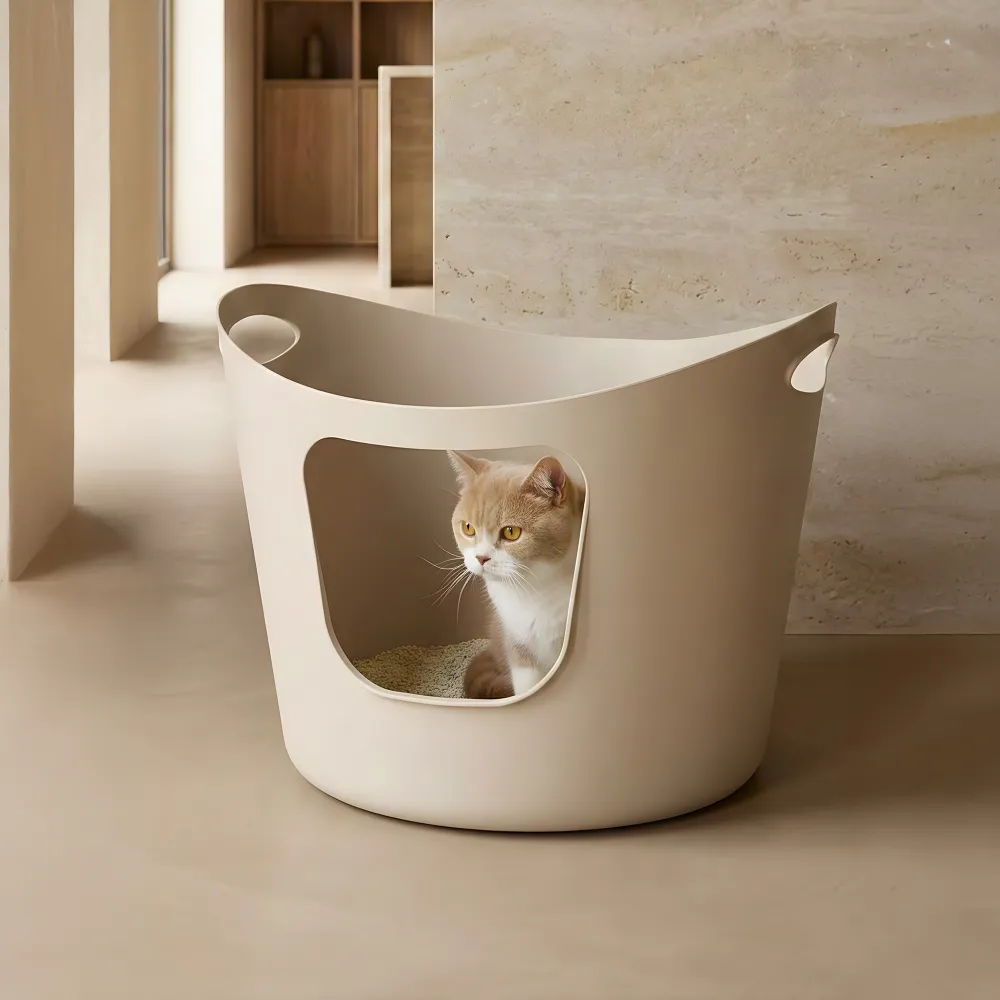
Good to know: An open box with a lower entrance can still let some litter escape through the front. A litter mat is a useful addition.
2. A top-entry cat litter box
If your cat regularly sends litter flying over the sides, a top-entry box offers a different solution.
Instead of entering through the front, your cat climbs onto the lid and enters through an opening at the top.
The high walls help keep scattered litter inside.
But there's another clever detail.
The Savic Hop In has a perforated, slightly sloping lid.
When your cat walks across it on her way out, loose granules can fall from her paws back into the box.
So the design addresses both problems: litter kicked out during digging and litter carried out on paws.
For larger cats, the Savic Hop In Giant offers more room to turn and dig.
Top-entry boxes also make it harder for dogs to access the litter, which is useful when cats and dogs share a home.
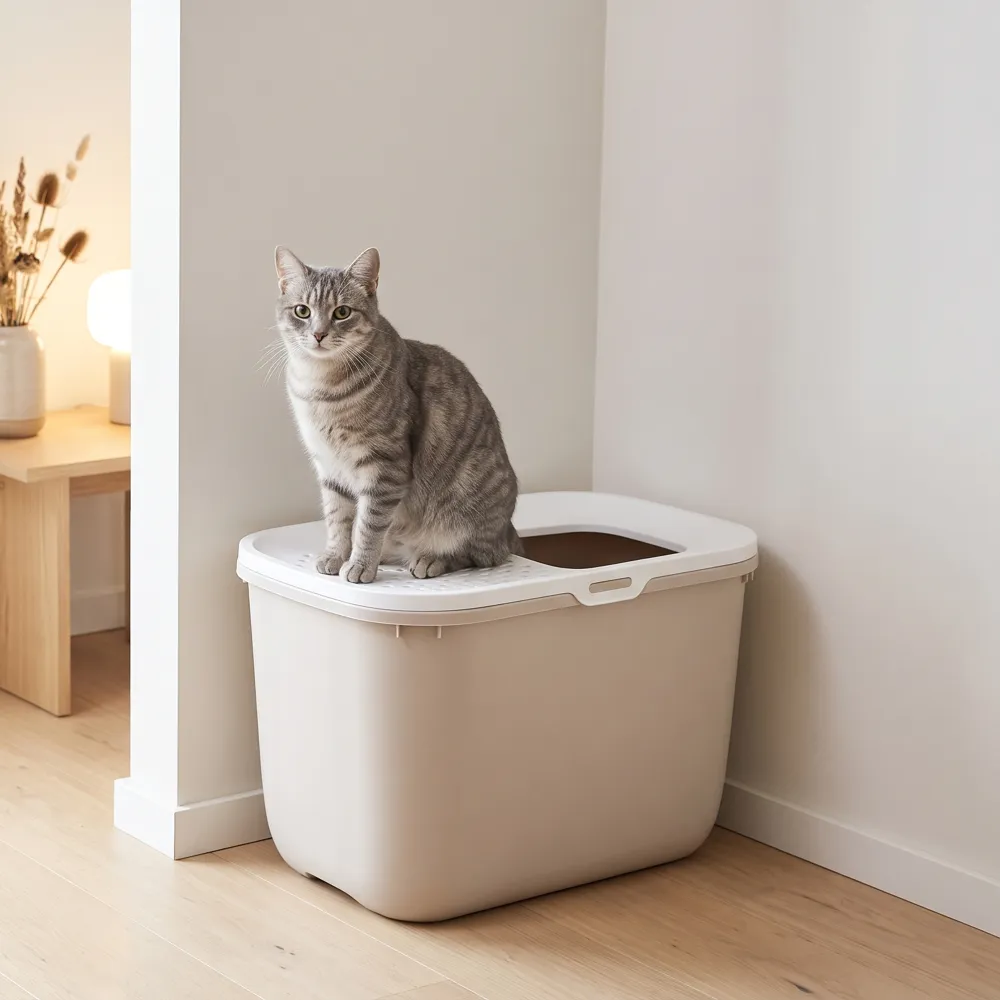
One important consideration: Your cat needs to be comfortable jumping in and climbing out.
3. Two ways in, one way out: Savic Ease-In
What if your cat hesitates to jump into a box from above, but you'd still like the benefits of a top exit?
That's where Savic Ease-In comes in.
Ease-In gives your cat two ways to enter:
- Through the front door, without having to jump in from above.
- Through the top opening, if she prefers.
But whichever way she enters, she leaves through the top.
As your cat climbs out, the built-in litter grid and first step help remove loose granules from her paws before they reach the floor.
It combines a more accessible way in with the litter-catching benefits of a top exit.
And because a litter box is part of your home too, Ease-In features a ribbed exterior and comes in warm grey and mocha.
For cleaning, the lid hooks onto the side, leaving both hands free.
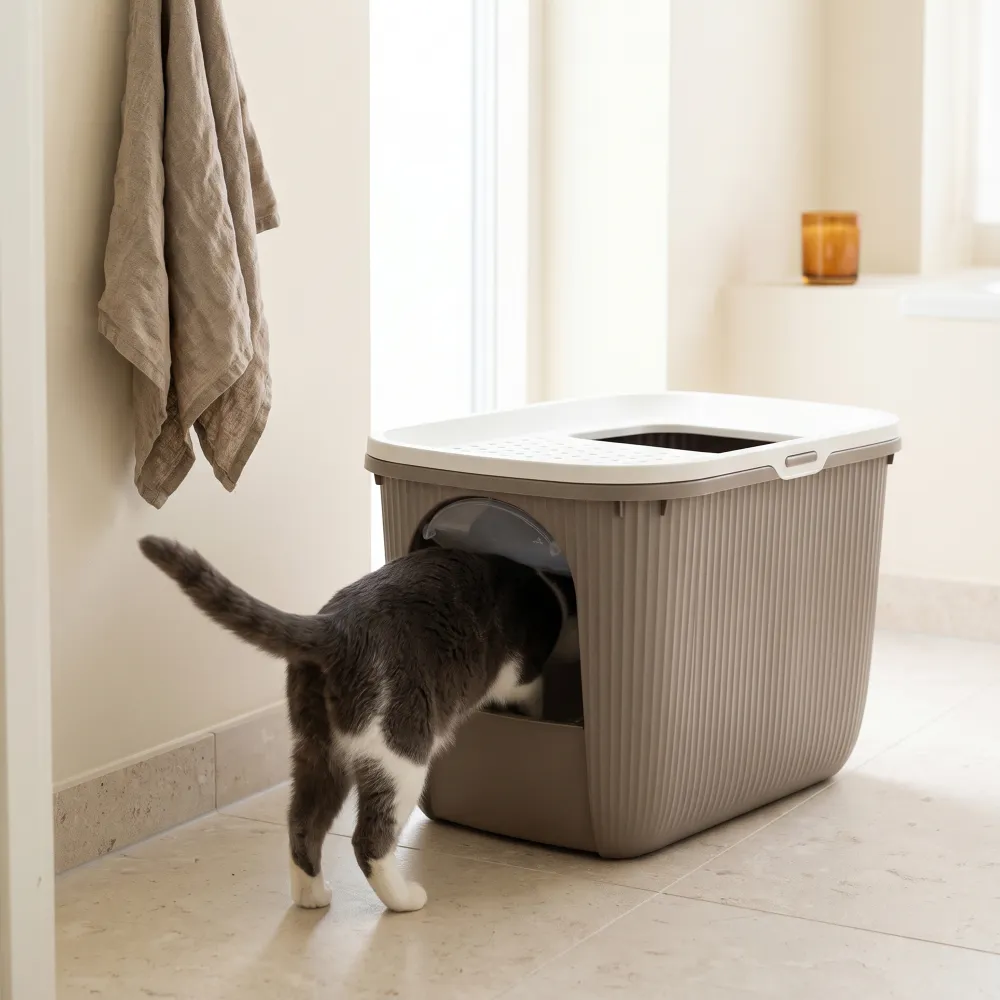
Remember: Ease-In makes entering easier for cats that dislike jumping in from above. Your cat still needs to be able to climb out through the top.
Don't forget the litter mat
Even the best litter box can't guarantee a completely litter-free floor.
A well-placed litter mat can make a noticeable difference.
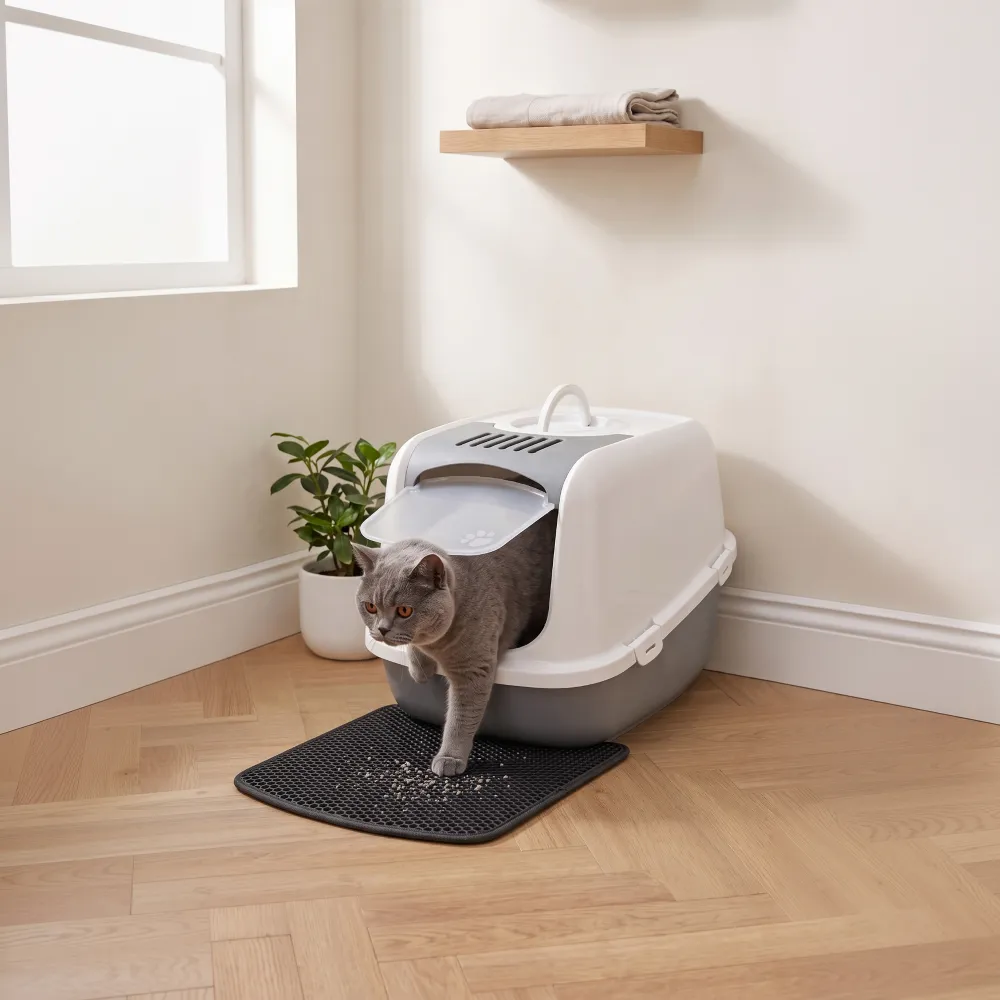
The Savic Litter Catcher Mat features a double-layer honeycomb structure.
When your cat steps across it, loose granules fall through the upper layer and collect underneath.
The soft, flexible surface feels comfortable under her paws. And when it's time to empty the mat, simply fold it and tip out the collected litter.
Where you place the mat matters.
With a front-entry box, put it directly outside the entrance.
With a top-entry box, place it where your cat usually lands.
After all, the mat can only catch litter if your cat actually walks across it.
Which litter box suits your cat?
Your cat's habits Savic option
Digs hard and kicks litter over the sides Hop In
Is large and needs more room to dig Hop In Giant
Digs hard but prefers an open box Flex-a-loo
Hesitates to enter from above but can climb out Ease-In
Needs a low entrance and exit Aseo
The important thing isn't choosing the tallest box or the one with the most features.
It's choosing a litter box that works with your cat, not against her.
Frequently asked questions
Will my cat use a top-entry litter box?
Some cats take to it naturally. Others need more time, and some simply prefer an open tray.
Introduce the new box alongside the familiar one and let your cat explore it at her own pace. Never force her inside.
Does a top-entry litter box smell more?
A closed box can trap odours inside, even when the room smells fine.
Scoop daily, clean the box regularly and make sure your cat is comfortable using it. A lid is no substitute for hygiene.
Which cat litter helps reduce tracking?
Many cats prefer fine, unscented, clumping litter. However, smaller granules may also stick to paws.
Try adding a litter mat or changing the box setup before switching to a completely different litter.
Is a top-entry litter box suitable for an older cat?
Not always. Cats with stiff joints or reduced mobility may struggle to jump in and climb out.
Choose a litter box with a low entrance and exit if your cat has difficulty moving.
What if my cat suddenly starts going outside the litter box?
A sudden change in toilet habits can have a medical cause.
If your cat starts urinating outside the box, strains to urinate or changes her usual behaviour, contact your vet. A different litter box won't solve every problem.
Less litter on the floor. More comfort for your cat.
Your cat will probably never stop digging. And she shouldn't have to.
But you can make the area around her litter box easier to live with.
Start by noticing where the litter escapes. Choose a box that suits the way your cat moves and digs. And add a mat where it makes a difference.
Because a cleaner home matters. But so does a litter box your cat actually wants to use.
Less sweeping. Same happy digger.
Related reading
- Where to put a cat litter box, and how much space does it need?
- Which covered litter box fits a small home?
- Best litter box for cats: comfort & hygiene tips
About the author
Olivia Maes, Marketing, Savic.
Olivia has worked at Savic for more than 25 years. She writes about how thoughtful product design can make everyday life more comfortable for pets and the people they live with.
Savic is a Belgian family business founded in 1953 and based in Heule, Belgium. Savic pet accessories are distributed through wholesalers and distributors in more than 88 countries.

